

REVIEW - If you are looking for an outdoor wifi ceiling fan that does more than just move air, the Lumary 20" Smart Outdoor Ceiling Fan makes a strong first impression. It combines a hanging chandelier-style design, six fan speeds, app control, RGB lighting, and a removable outdoor-friendly setup that is especially appealing for seasonal spaces like gazebos, patios, and covered canopies.
In this review, I am taking a close look at how this fan fit into a real gazebo installation, how easy it was to mount, what the lighting and fan controls are like, and where the product falls short. After replacing an older outdoor chandelier that had slowly been destroyed by years of wind and weather, this felt like the right time to see whether a modern outdoor wifi ceiling fan could really improve both comfort and atmosphere.
Price: $219.99
Where to buy: Amazon
What is it?
The Lumary 20" Smart Outdoor Ceiling Fan is a compact hanging fan/light combo designed for covered outdoor spaces. It functions like a small chandelier with an integrated fan and smart RGB lighting, and it can be controlled by remote or app. It is intended for outdoor use, but it could also work in an indoor patio-style space if that design fits your setup.
Why this installation made sense
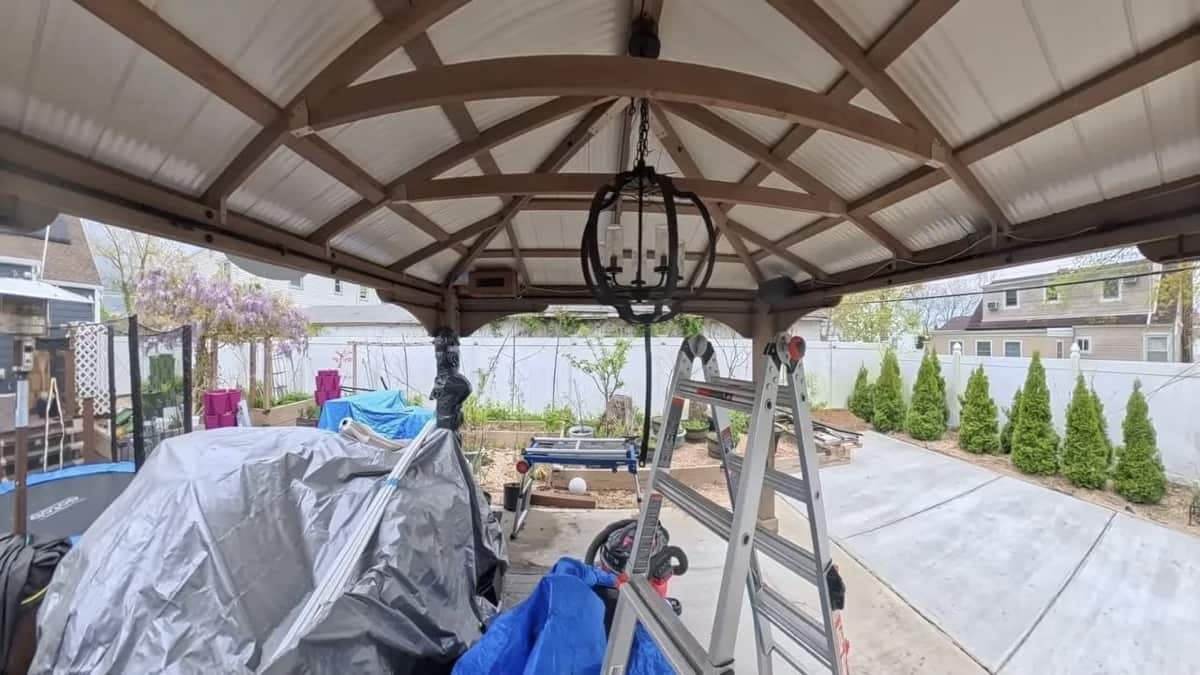
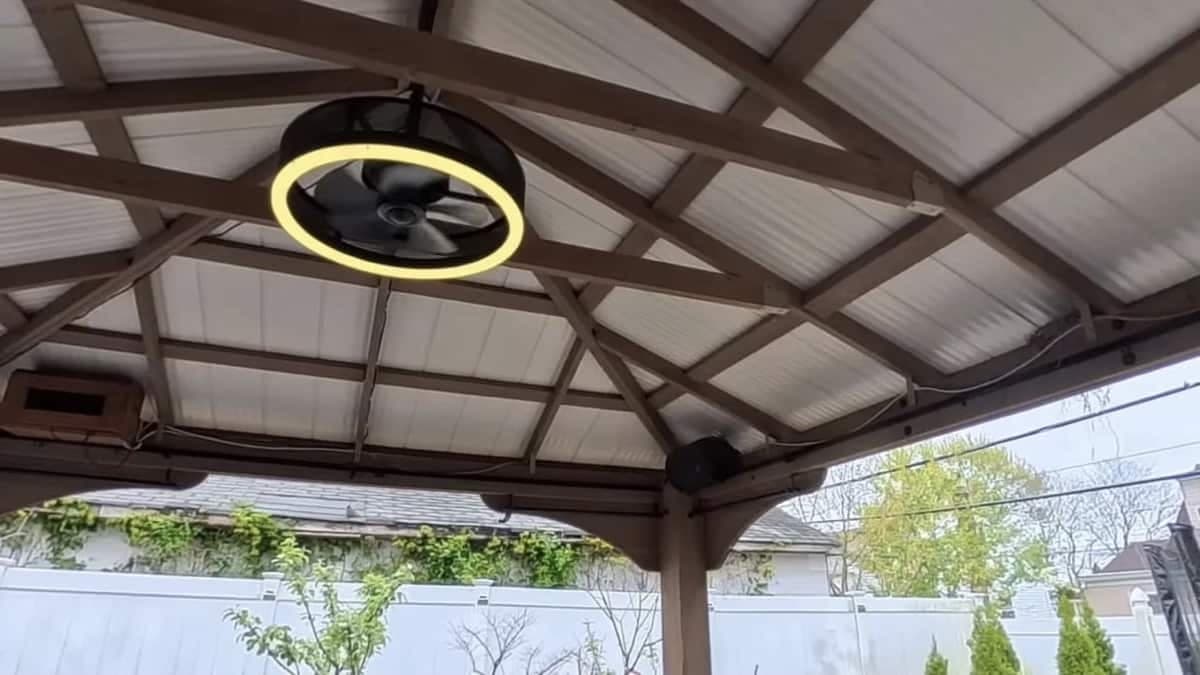
This review was not done in a lab or a staged showroom. The fan was installed in a working backyard gazebo in New York, replacing an older chandelier that had been hanging there for about four years. That old fixture still worked, but it had clearly reached the end of its useful life. Constant swinging in the wind had loosened hardware, parts were damaged, and temporary fixes like wire ties were already in play just to keep it going.
That real-world context matters because it highlights what many outdoor setups actually deal with: weather, motion, seasonal use, and the need for hardware that can survive more than a few months outdoors.
What stands out about the design
The Lumary unit is styled more like a hanging chandelier than a traditional flush-mount fan. It drops down from a support point and includes a fan integrated into the lighting body. For gazebos and covered seating areas, that look works well because it feels decorative while still being functional.
One of the more useful design choices is that this is not a permanently fixed hardwired-only install. It uses a long power cord and a detachable hanging arrangement. At first, that might seem less premium than a hardwired ceiling fan, but in an outdoor setting it actually offers some practical advantages.
For anyone with a seasonal gazebo, especially in colder climates, the ability to disconnect or partially remove the main fan assembly is a meaningful benefit. That can help with long-term durability when winter weather would otherwise beat up the fixture for months at a time.
What’s included and how the mounting system works
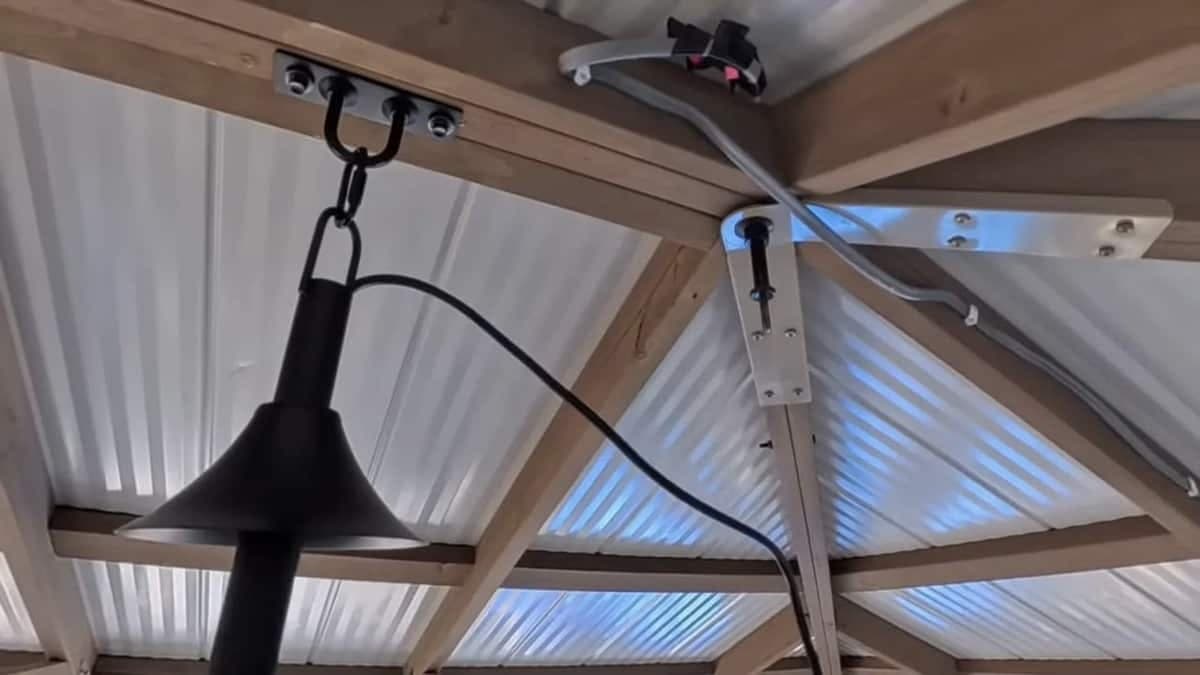
The fan includes the hardware needed for hanging, including a strong carabiner-style hook. During installation, the support was upgraded with two long eye bolts mounted into the gazebo structure, and the fan then clipped into place from there.
The hanging pole and body connection is one of the more thoughtful parts of the product. The cord runs through the lamp tube and connects with what appears to be a waterproof connector. The physical connection is not relying on just a pair of screws either. There is also a locking pin passing through the assembly, with screws helping prevent rotation. That gives the unit a more secure feel once installed.
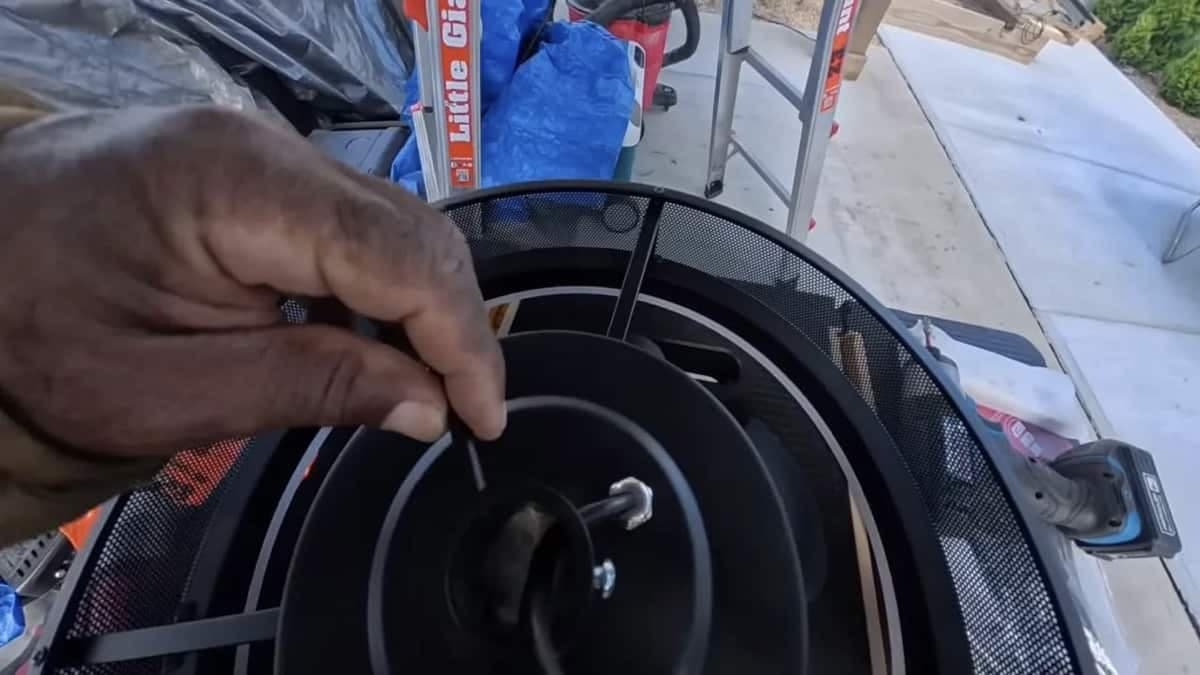
This matters because outdoor hanging fixtures can sway. A mount that feels mechanically reinforced is a much better fit for this kind of application than a simple decorative suspension system.
Installation experience
The installation took place in an active backyard setup that was still being prepared for summer, so the environment was far from pristine. That actually made the review more useful. The fan was installed where it would really be used, with real mounting constraints and real power-routing decisions.
Here is the basic installation flow:
Remove the old chandelier from the gazebo.
Inspect the new fan’s hanging tube, connector, and support hardware.
Install stronger support bolts in the gazebo structure.
Hook the fan in place using the included carabiner-style hanger.
Route the long power cord back to the gazebo’s power source.
Connect power and test the light and fan controls through the app.
One detail worth noting is that the installer initially considered whether the included or available screws were enough, especially because the fan has some weight to it. Galvanized outdoor screws about an inch long were used, though there was some hesitation about whether a larger size might be better for extra confidence. That is less a criticism of the fan itself and more a reminder that with any hanging fixture, the quality of the structure and hardware matters just as much as the product.
Power setup and seasonal practicality
This outdoor wifi ceiling fan was connected in a gazebo that receives seasonal power through a heavy-duty extension setup rather than a permanently permitted electrical run. In some parts of the Northeast, permanently wiring power to a gazebo can create added permit requirements, so a seasonal plug-in arrangement is sometimes the easier and more practical route.
That context makes the long included power cord a real advantage. It gives you flexibility if your outlet is not directly overhead or if you want the option to disconnect the fan during the off-season.
There is also a second benefit: the fan body can be removed separately from the hanging pole. By loosening the screws and removing the securing pin, the main fan and electronics section can be taken indoors while the hanging stem and wire remain in place. For anyone trying to extend the life of an outdoor wifi ceiling fan in a four-season climate, that is a genuinely useful design choice.
Lighting performance and RGB effects
The lighting is one of the main reasons someone might choose this model over a plain patio fan. The app provides access to an RGB color scale, allowing you to select a wide range of colors instead of being locked into a standard white light experience.
That means this fan is not just about airflow. It is also about mood lighting. Whether you want subtle accent color for an evening under the gazebo or something more playful for outdoor gatherings, the RGB system gives the fixture more personality than a typical porch fan.
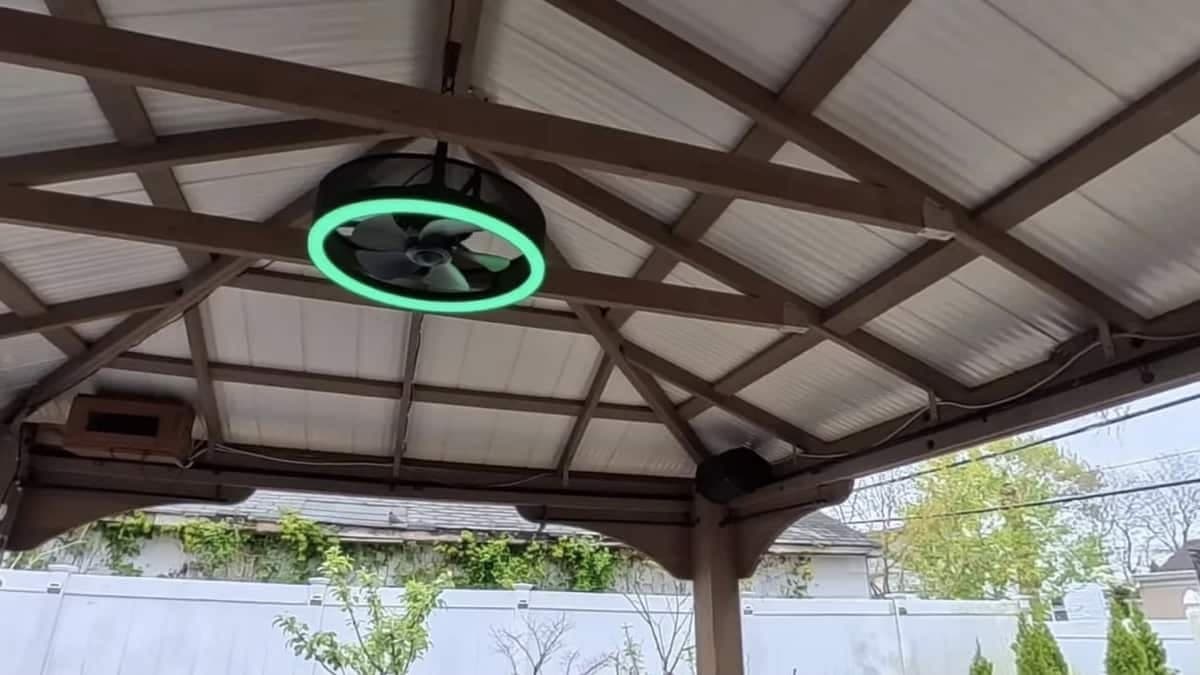
Based on the installation impressions, the colors looked attractive and were one of the standout positives of the unit. If your goal is to add atmosphere to a covered outdoor space, this is where the Lumary fan separates itself from more basic competitors.
Fan performance and controls
On the airflow side, the fan offers six speeds. Through the app, the speed can be adjusted up or down, turned off, and ramped back to maximum. There is also a reverse function, along with additional operating modes such as nature and fresh air settings.
During testing, the fan appeared to respond smoothly to changes in speed, and the gradual slowing down was easy to observe. While long-term summer heat performance had not yet been fully tested, the early impression was that it produced a decent amount of airflow for its size.
For a compact outdoor wifi ceiling fan, six speed levels is a welcome feature. It gives more control than the basic low-medium-high approach found on cheaper fan/light combinations.
App and remote control experience
The fan supports both app control and remote control, and in day-to-day use the app came across as the better option. It handled lighting changes, fan speed adjustments, and other functions without much trouble. The general control experience was positive enough that the remote ended up feeling less important.
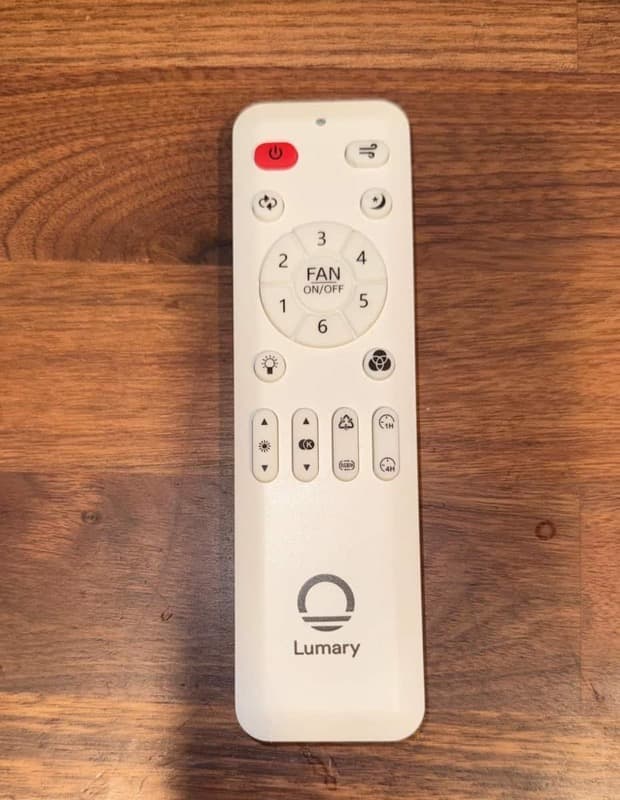
Unfortunately, the remote itself is one of the weakest parts of the package.
The main drawbacks
There were not many major complaints, but the ones that did come up are worth knowing before buying.
1. The remote feels cheap
The remote was described as extremely lightweight and flimsy, to the point that it did not inspire much confidence for outdoor use. While a wall holder is included, this is not something that feels like it should be left outside in the elements. The good news is that app control reduces the need to rely on it.
2. No batteries included
For a product in the $200-plus range, the lack of included AAA batteries is frustrating. It is a small omission, but it becomes very noticeable when you are in the middle of installation and realize the remote cannot be tested without a last-minute battery hunt.
3. 2.4GHz connectivity issues were noticed
This was the most meaningful functional issue during the review period. The fan uses 2.4GHz Wi-Fi, and in this particular setup the light appeared to turn back on by itself after being switched off. It did not seem to affect the fan motor, but the lighting behavior was inconsistent enough to be annoying.
It is not clear whether that problem came from neighborhood congestion, a large number of nearby smart devices, or something specific to the network environment. In a less crowded wireless environment, the experience may be better. Still, if you are considering this outdoor wifi ceiling fan for a smart-home-heavy household, that issue is worth keeping in mind.
The biggest strengths
Even with those drawbacks, there is a lot to like here.
The design is attractive and fits well in a gazebo or covered patio.
The RGB lighting adds atmosphere rather than feeling gimmicky.
The app works well and offers broad control over colors and fan speed.
The six-speed fan gives solid flexibility.
The hanging system feels secure and thoughtfully engineered.
The long power cord makes installation easier in seasonal spaces.
The removable fan body is a smart feature for winter storage.
The overall unit feels lightweight without feeling weak.
Who this outdoor wifi ceiling fan is best for
This fan makes the most sense for people with:
Covered gazebos
Patios with accessible power nearby
Canopies or outdoor seating areas where mood lighting matters
Seasonal outdoor spaces that benefit from removable hardware
Smart-home setups where app control is preferred over a remote
If you want a purely hardwired, permanently mounted, heavy-duty fixture with no seasonal removal in mind, you may want something more traditional. But if flexibility, color, and easier removal are part of the goal, this outdoor wifi ceiling fan offers a compelling mix of features.
See it in action
Final thoughts
The Lumary 20" Smart Outdoor Ceiling Fan ended up being a meaningful upgrade over an aging gazebo chandelier that had no fan and no easy way to survive years of outdoor exposure. Its biggest wins are the RGB lighting, smart controls, easy seasonal flexibility, and a mounting design that feels more practical than decorative fluff.
It is not perfect. The remote feels cheap, batteries should absolutely be included, and the 2.4GHz lighting issue is something I would want to keep monitoring. But taken as a whole, the fan still earns a thumbs up.
If your goal is to add airflow, lighting, and a bit of personality to a covered outdoor space, this is one of the more interesting outdoor wifi ceiling fan options in its price range. And for anyone in a climate where bringing the main fan assembly indoors during winter is a smart move, the detachable design may end up being the feature that matters most over time.
What I like about the Lumary 20" Smart Outdoor Ceiling Fan
Attractive chandelier-style design
RGB lighting looks great
App control is convenient and useful
Six fan speeds and reverse mode
Long power cord adds installation flexibility
Detachable design is ideal for seasonal storage
Hardware and hanging options are well thought out
What needs to be improved?
The remote feels very cheap
AAA batteries are not included
2.4GHz connectivity behavior may be inconsistent in crowded wireless environments
Price: $219.99
Where to buy: Amazon
Source: The sample for this review was provided by Lumary. They did not have a final say on the review and did not preview the review before it was published.